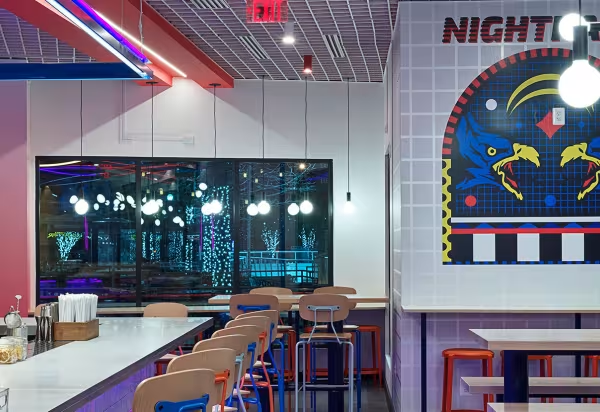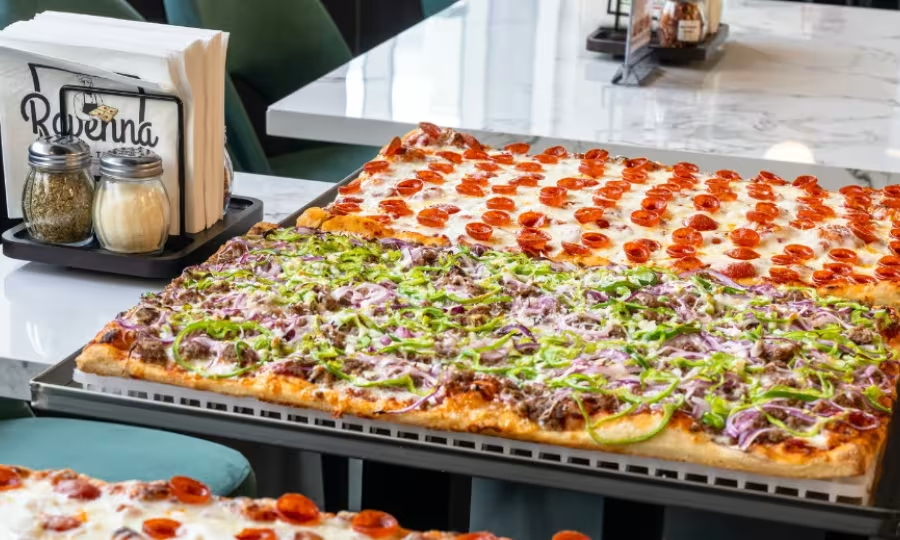
On a weekday afternoon along the Rosslyn-Ballston corridor in Arlington, the sidewalk traffic is a fast-moving blur of corporate employees, neighborhood residents, and tourists navigating the high-rises. Inside Ravenna Pizza at 1500 Wilson Boulevard, however, the pace shifts into something more deliberate. Here, Mustafa Durran and his wife, Raha, are just over a year into a culinary experiment that bridges ancient Roman baking techniques with the memories of a childhood spent in western Afghanistan.
When the couple launched the restaurant in late February 2025, they were driven by a shared frustration with the local dining scene. To Mustafa, eating out had become an unreliable gamble. A neighborhood spot might serve a spectacular pie one week, only for the quality to plummet the next, or for the shop to vanish entirely. The Durrans wanted to build something stable, rooted in deep personal passion and absolute consistency.
They found their inspiration in the square, light, and airy slices sold across the streets of Rome. For Mustafa, that first encounter with authentic pizza al taglio was a revelation—but it also triggered a profound sense of familiarity. Born and raised in western Afghanistan, he immediately recognized an uncanny similarity between the high-hydration, long-fermented Roman crust and the traditional flatbreads his mother used to bake in his childhood home. He suspects the connection is not a coincidence, but rather a culinary artifact carried across continents centuries ago along the Silk Road trade routes. That emotional resonance, paired with an open business niche in Arlington, became the foundation of Ravenna Pizza.
Breaking the Square Mold
Operating a pizza shop that deviates from the standard round New York or Neapolitan styles comes with an uphill battle: obscurity. Throughout their first year, Mustafa and Raha found that their primary challenge was not just baking, but education.
"What is Roman-style pizza? Why is it square?" These are the questions the Ravenna team hears daily from curious, and sometimes skeptical, passersby. Rather than pushing a high-volume assembly line, the Durrans treat each customer who walks through the door as an individual guest worthy of a real conversation. They explain the mechanics of the dough—made from premium flour free of preservatives, chemicals, bleach, and the crucial addition of extra virgin olive oil and imported Italian tomatoes.
The unique fermentation process creates a crust so light and highly digestible that sit well with customers who often debate about getting a second slice.
The education works; Mustafa notes that these first-time tasters regularly return, often bringing two or three friends along to share the discovery. Now in their second year of operation, the Durrans are seeing more stable financial projections, thanks to this growing, educated base of local regulars.
The Art of the Ten-Minute Slice
In the pizza industry, a common piece of conventional wisdom dictates that customers must wait 20 to 30 minutes for a high-quality, artisanal pie. Durran views this accepted standard as total nonsense. By utilizing traditional Roman baking methods, Ravenna claims it is able to serve premium pizza without compromising on the integrity of the product.
This speed requires meticulous operational discipline, down to details that most observers might find tedious. Mustafa confesses to an un-scalable obsession with presentation. Every single order that leaves the kitchen must be visually perfect, entirely free of blemishes, and arranged precisely. It is a quiet, daily commitment to craftsmanship that ensures the visual appeal matches the quality of the ingredients.
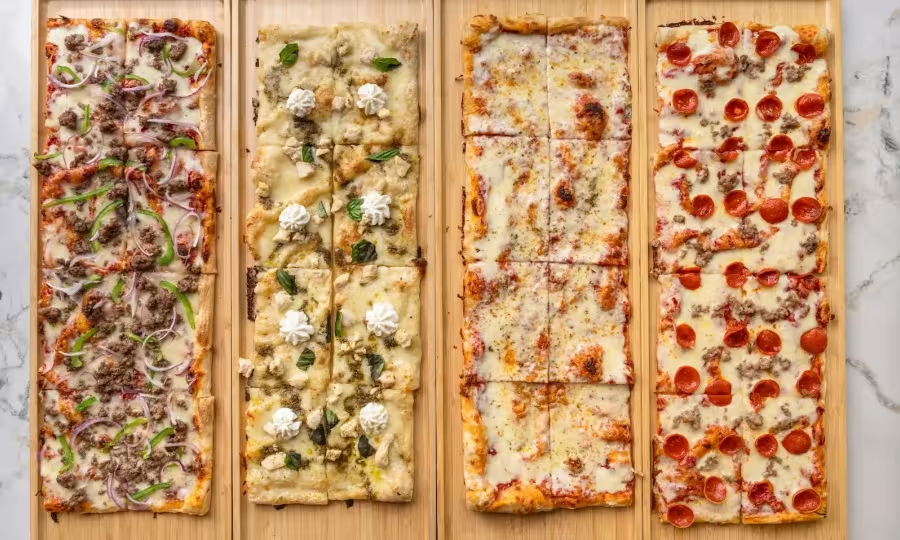
This dedication extends to the shop’s internal operations. Managing a food service business in a transient market is notoriously difficult, and the duo initially faced the industry’s typical "revolving door" of staffing shortages and high turnover. After starting with a team of 15, they have refined their approach, focusing heavily on transparent onboarding, clear communication, and treating their staff with genuine respect. Today, they operate with a tight-knit, reliable core of eight to 10 employees who are growing alongside the business from the ground up.
Engineering the Perfect Takeout
While the vibrant mix of corporate offices and residential high-rises in Arlington keeps the dine-in seating at capacity, a compact slice-shop format faces built-in revenue ceilings if it relies solely on foot traffic. To build a sustainable long-term business, Mustafa and Raha are shifting their focus toward expanding their takeout, delivery, and corporate catering operations, with a goal of having catering make up 15 to 20 percent of total revenue over the next six months.
Scaling a delivery model, however, introduces a new set of hurdles—namely, the loss of quality control once food leaves the counter. Roman-style pizza inherently travels better than thin-crust varieties because its thick, airy structure maintains its texture without becoming soggy. To optimize this advantage, the Ravenna team re-engineered their packaging, adding a specialized internal liner and piercing two distinct ventilation holes in the boxes to balance heat retention with steam release.
The larger headache remains third-party delivery applications. Mustafa notes the ongoing frustration of watching a freshly baked pizza sit on the counter losing prime quality because a third-party driver arrives 25 minutes late. To combat this and reclaim a direct relationship with their patrons, Ravenna now offers exclusive incentives for customers who order directly through the restaurant as a way to combat the rising costs of 3rd party delivery apps which seems to be yielding a steady rate of direct-order conversions.
The ultimate validation for the Durrans arrives in the quiet moments of connection with their guests. For Mustafa, the most rewarding feedback doesn't come from online metrics, but from the emotional reactions of the people sitting at his tables.
The highest praise comes from well-traveled locals or Italian expatriates who take a bite, look up, and tell him that the slice takes them straight back to the pizzerias of Rome. In a bustling Virginia suburb, thousands of miles from Italy and a lifetime away from the bread ovens of western Afghanistan, a square slice of pizza has managed to close the distance.
Our Story Process
This profile was developed through our independent editorial process to ensure clarity, accuracy, and a fresh local perspective. No part of this story was paid for, sponsored, or tied to any monetary exchange. Our reporting relies on first-person insights to craft a unique and original story.
Additional Stories
Taste Over Spreadsheets: How Maison Cheryl’s Chef-Owner Built a Stable Footing in Clarendon
Out of the Junk Drawer: How eWaste Warriors is Saving Arlington's Stranded Tech